Untapped Stacks
The often-forgotten branch of Ohio University Libraries
By Madeleine Colbert | Design by Sophia Cianciola
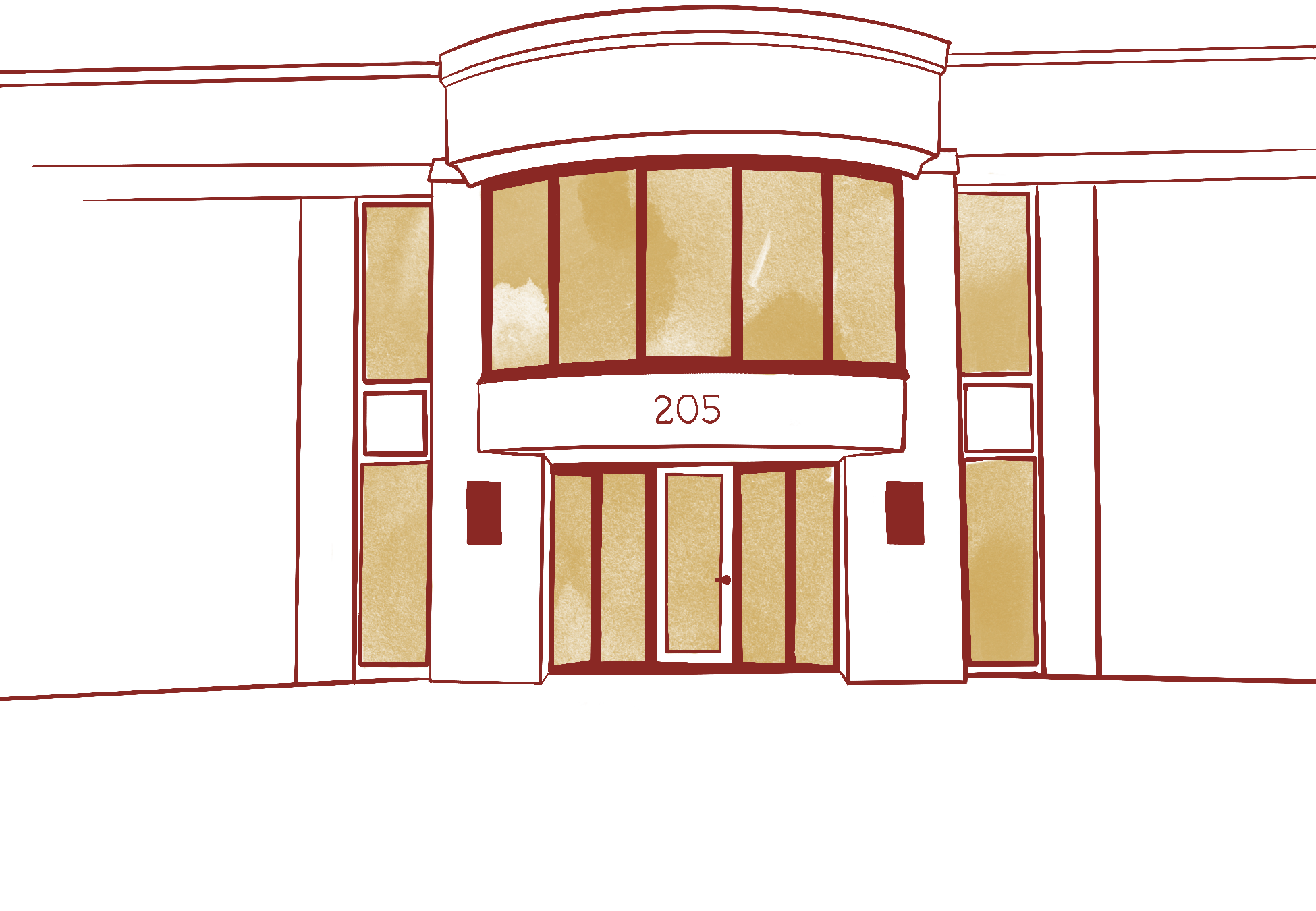
The library holds countless resources, yet Alden never seems big enough to contain them all. That's where the Hwa-Wei Lee Library Annex comes in. Located at 205 Columbus Rd., it's just a short drive away from campus, though many students have never heard of it or realized they’ve used it.
The Hwa-Wei Lee Library Annex contains a collection of rare and historical books, photography, journals, art and more. The materials are found both digitally and physically, and the annex’s staff members work to archive them in a variety of different ways. For example, Aurora Charlow, the annex's digital archivist, works to preserve, organize and restore the digital media found in the annex.
“I keep track of, arrange and describe the materials in the archives. They’re referred to as born-digital materials, and that just means anything that never had a physical component. It covers stuff that's on an optical disk … and goes as far back as floppy disks,” Charlow says.
Charlow is currently working on archiving a photography collection from Dan Dry, who donated his collection, valued at $4.3 million, to Ohio University Libraries back in January 2024. The collection includes between 1 million and 6 million photographs. As seen with Dry’s collection, many of the pieces in the annex are donated by individuals or their families, but not everything found in the annex and library is obtained through donation.
“A lot of our archives and special collections come to us through donation, but most of our circulation collection is acquired by the library using their acquisitions budget … sometimes that's electronic access and sometimes it's a permanent purchase,” says Miriam Nelson, the director of Mahn Center, Preservation and Digital Initiatives.
The collection of both donated and purchased materials is stored in a giant depository located in the annex. Filled with shelves to the ceiling, the depository contains anything you could think of, ranging from books and journals to VHS tapes.
“We have 650,000 library items out here,” says Sandy Gekosky, a library support associate and preservationist.
The annex works within Ohio’s state depository system, which includes five different depositories located at different colleges throughout the state. The system allows statewide circulation of these archival materials. It’s also part of why students are able to request and use so many different resources through the university.
“People request things that are stored out here. So three days a week, things get delivered to Alden so that people can pick them up there, or they go out through OhioLINK,” Nelson says.
Outside of organization and storage, the annex works to preserve and protect old and rare items. This involves a multitude of different methods, such as building housing or boxes, to protect smaller, rarer or more fragile library items.
“I’m working on the housing that protects these items so that they don’t get damaged in transit or when they’re displayed. I’m making these folders and custom binders that house them ... so we have the ability to pull them out in a way that a person’s not handling them that much,” Gekosky says.
Beyond preventative conservation, staff also work on interventive treatment for their circulating collections: the collections available to borrow. This includes rebinding, or resewing spines and small paper mends. Many of these repairs are done on the second floor of the annex, and antique machinery is used to complete them, with one machine originating in 1903. The annex receives a variety of different materials that need repair. These materials are often sent to the annex from other parts of the library system. “They’ll send us a preservation form, and they’ll check off ‘spine’ or whatever they think needs work for us to complete,” Gekosky says.
As a whole, the annex’s main goal is to store and preserve materials for researchers to use in their work. Through their giant depository, they frequently make new, different, rare and unique materials available. “Most of what happens out here is work on or with the collection, so we can make them accessible to people doing research. You can absolutely come out here if there's something you want to see that's stored in the depository ... they will also go back to Alden Library in archives and special collections, and so they’ll be made available there,” Nelson says.
Why does this matter to students? Without the work of the university library system, students wouldn’t have access to many of the resources used in day-to-day research. For example, the library’s acquisition budget is why students now have access to the Criterion Collection. Beyond that, the annex is another asset available to students that commonly goes unnoticed or overlooked, even though it contains multitudes of materials that could aid research or simply pique someone's curiosity.
“I would encourage people just to be aware that we do store this material out here ... students should know they can reach out,” Nelson says. b